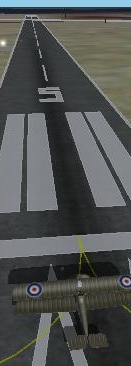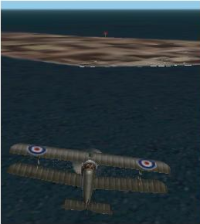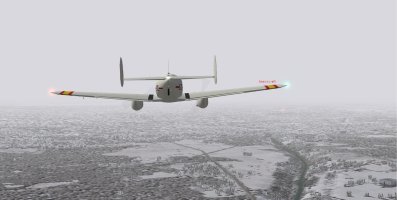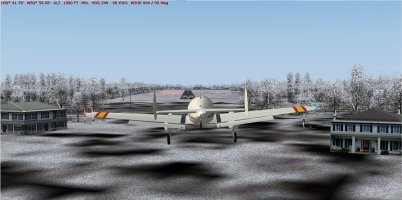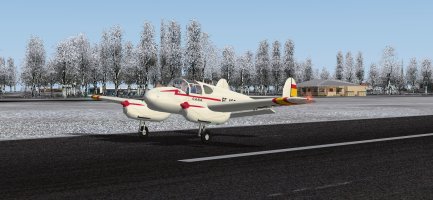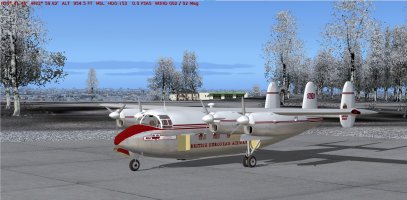
• Please see the most recent updates in the "Where did the .com name go?" thread. Posts number 16 and 17.

    Post 16 Update

    Post 17 Warning

  • Bandwidth Drive 2026 is over

    Thanks to everyone who donated.

**The OFFICIAL All Sims Air Tour Thread**

Sunday 25th. Jan.
Richmond (KRIC) → Frederick (KFDK)
FS9/2004

We had asked at the FBO if there were “older” craft for hire. The FBO manager scratched his head, rubbed his oily hands on his overalls looked at all three of us from head to toe: “Don’t believe there are” he replied after a long pause.
We headed for the hangar door. “Well maybe one.” he muttered.
“Available today?” we asked almost in unison, stopped in our tracks.
“Couldn’t rightly say. Old Kruger, has an old Cessna Airmaster. Hasn’t flown her in years but keeps her clean as a pin. Hei’s in here most days polishing and tinkering. If he’s here you’ll find him and the Cessna in the hanger next door. Good luck!”
I wondered why we needed luck.
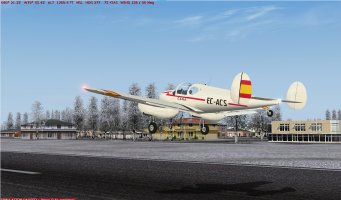
“An Airmaster! It was powered by a radial used by many of the first aircraft to compete in the NAT. I remembered an old advert I came across in an aviation magazine of the 1930s:
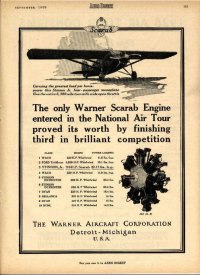
Scarab engine.jpg


She did look well kept. A noise from the cockpit led us to “Old” Kruger, he was polishing the interior leather.
“What can I do for you?” a mop of white hair and rheumy eyes staring at us quizzically.
“The FBO manager said you might be prepared to hire her out”. Suzanne nodded at the cream machine.
“$500 not a dime less, for one day” We looked at each other thinking his prices had stuck in the past with the plane.
“All her paperwork up to date?” Suzanne asked gently.
“Not flown her in a while, since my wife died, we used to fly together. The engine is run at least once a week though. Paperwork is in a box somewhere here”.
Paperwork was all up to date. Suzanne insisted on powering her up to test all that could be tested.
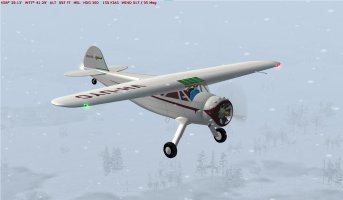
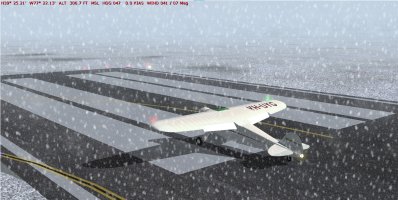
We all shoved her out into the snow, not allowed to fire her up in the hanger.:
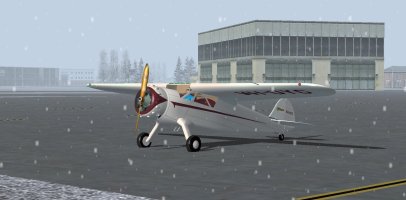
2 c37.jpg

She would not start for love nor money.
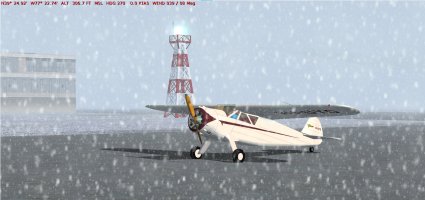
“I think the battery is flat” Callum said. I’ll see if they have a battery trolley. He returned with a ground power unit on wheels. We connected it up (in FS9, you have to re-load the model to get a charged battery) The C37 was still an absolute pig to get started, (Ctrl+ E not working) one had to manually use the starter key and keep it turning till the engine fired. Being rewarded by radial smog:
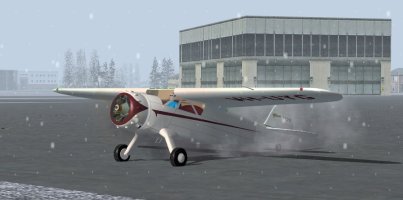
3 starting.jpg

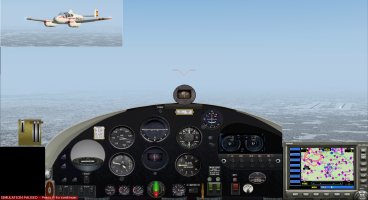
Once running she sounded sweet. She was equipped with a modern radio stack and GPS:
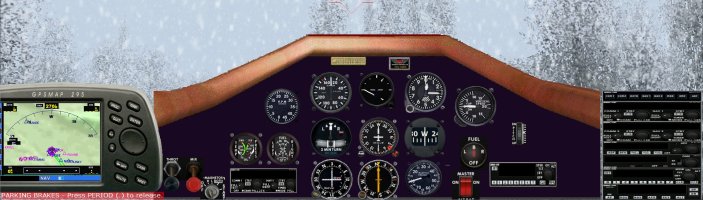
Panel.jpg

“She runs sweetly and is equipped for IFR flight.” Suzanne was happy, the only one of us with an Instrument Rating.
Old Kruger had wandered over: “You’re not thinking of taking her up in this?”
“Not sure” Suzanne replied.
“You guys, crazier than a box of frogs. Still she’s well insured, and maybe time I said goodbye. No point in pretending my wife is going to turn up to fly with…” he tailed the sentence off as he wandered back into the hanger.
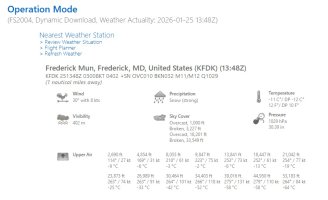
“Maybe he’s right, the weather forecast here is not good:
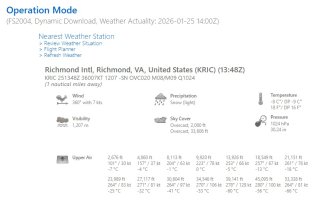
KRIC weather.jpg
and worse in KFDK:
kfdk weather.jpg
Do we really want to be finding a rwy in 400m. visibility at 303’ with overcast at 1000’?” I asked Suzanne and Callum.
“We can do this” she replied.
“Only if you’re absolutely sure” I replied with sayings such as: Discretion is the better part of valour and the old saying about bold and old pilots running round in my head.
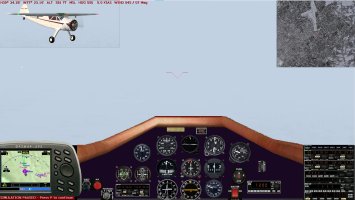
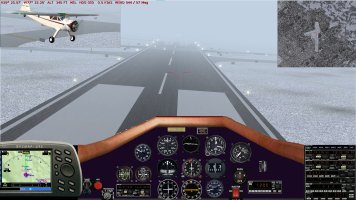
She was sure, so off we went, filed an IFR flight plan powered the C37 up again, with difficulty I must add and got clearance for IFR take off. Lining up on rwy 4:
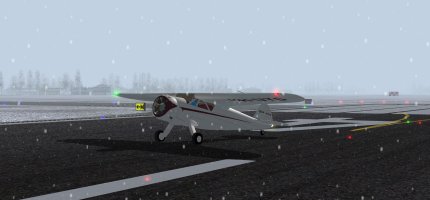
4 take off.jpg

The Cessna lifted within feet, climbing strongly:
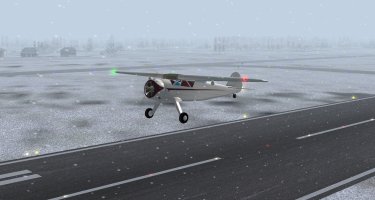
5 take off 2.jpg

We decided to cruise at 1200’ the ground just about still visible, wind 68 at 4 Kts.
The C37 more powerful than expected, we cruised at 150 Kts air speed, 144 Kts ground speed.
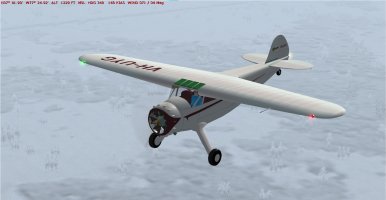
6 1200 ft.jpg

Conditions were getting worse, now fighting falling snow making visibility even worse:
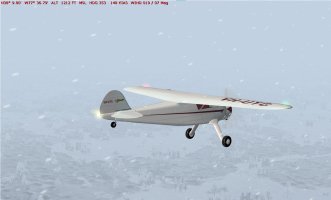
7 more snow.jpg

END PART 1
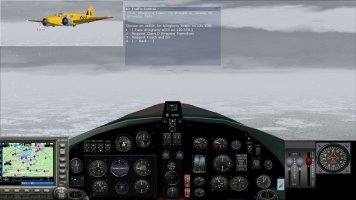
 
(KRIC) → (KFDK)
PART 2

We descended to 900’ the ground just about still visible:
8 900 ft.jpg

This was getting dangerous so we climbed to 3500’. Again the C37 surprised us with it’s performance climbing at 700’/min happily keeping a ground speed of 136 Kts.
We found a gap in the clouds at 2500’ so kept at that altitude.
9 gap in cloud.jpg

Navigation not a problem, looking to just skirt past Dulles Intl. (KFDK) almost exactly 30 nm. North of Washington Dulles.
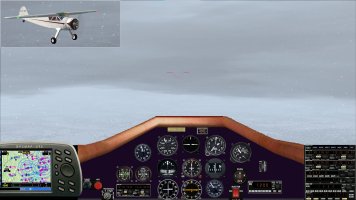
Some 10nm. from Frederick we began a descent and the airspeed gauge dropped to 0 feet. We guessed the pitot had frozen, the emergency red read out at the top of the screen also reading 0.0
This Cessna had no pitot heater, so we would just have to use the GPS ground speed.
10 pitot frozen.jpg

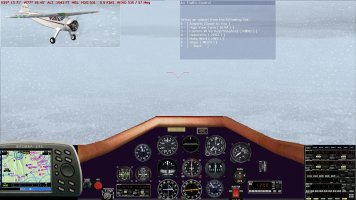
We lined up as best we could for rwy 5, but visibility was near 0’ and we saw nothing. We had to descend to 600’ only some 300’ above the hard ground and did a large gentle go-around, this time coming onto a heading 031, a runway light was just visible. Top left hand corner:
11 finally a light.jpg

we where way past the point where excitement turns to other excretions, cursing our decision to go.
Suzanne found the runway but we were almost at it’s furthest end, but decided she could bring her in:
12 rwy.jpg

Again the C37 behaved impeccably descending at 51 kts (according to the GPS, the air speed gauge still out of action). She did a good landing and managed to come to halt just feet from the end of the rwy:
13 down.jpg

The relief as we shut down was palpable. No one spoke. We needed to find a hotel with a well stocked bar. We needed to forget our idiotic decision to go. Or better still learn from it.
The only criticism of the Airmaster was the lack of a pitot heater.
13 parked.jpg
 
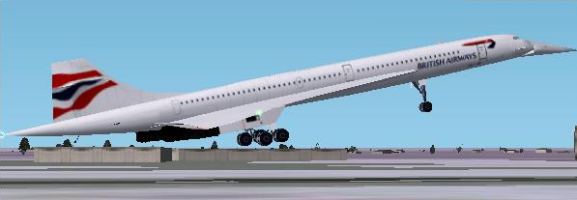
As planned, finally got a chance yesterday to take the Concorde from Detroit to Richmond. And today, completed my 'mission' successfully of flying the Sopwith Camel from Dare County to Kittyhawk after driving from Richmond to Dare. Full reports coming soon. (As stated previously, am using this Air Tour to practice flying the Concorde, and learning heaps in the process, plus the short hop in the Camel to Kittyhawk. So the best of both worlds!)

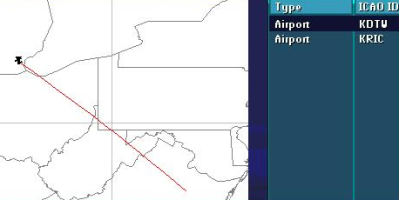
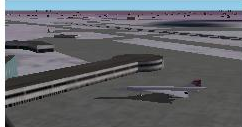
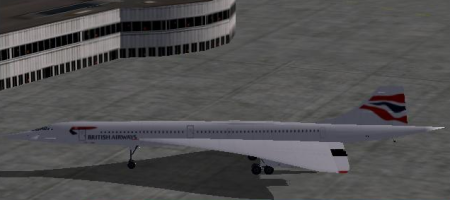
Part 1. Concorde from KDTW to KRIC.
1769431752204.png 1769431897959.png Parked at KDTW1769431658387.png
1769431968465.png
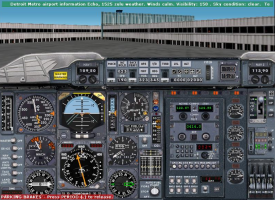
Inside the parked Concorde, doing prep and getting ready to start engines and get going.
 
KFDK>KAGC>KGDK(I19)>KYIP

With the sun coming up over the tail the Model 75 climbs to 4,500’ and the course is set to the northwest. With a dusting of light snow on the landscape we enter south-central Pennsylvania and soon Pittsburgh Approach checks-in. Another busy airspace ahead and as the chatter picks up I’m glad our course takes us to the south.

Past the big city and down to 2,500’ as we close-in on Rickenbacker the landscape turns to white and I’m ready for Dayton. Greene Co. isn’t exactly across the street from downtown but the FBO fixed me up with a car and off I went. After a quick lunch at the ‘Cherry House Café’ the Wright sites within Dayton are fun to see ... but Huffman Prairie is special. I took some extra time just to soak the place in and walk around (even in the cold).

Back in the air and turning to the north there seems to be nothing but white below and blue above ... nothing. Finally Toledo slipped by and it was time to contact Willow Run. Landing on 5R and taxing to the FBO I found myself still thinking about Huffman Prairie ... but this is Willow Run ... am I seeing a B-24 at rest on the far side of the field ... ?

NAT_16.jpg

NAT_17.jpg

NAT_18.jpg
 
Monday 26th. Jan.
Frederick (KFDK) → Pittsburgh, Allegheny County (KAGC)
FS9/2004

Part 1

Just our luck. To be stuck in one of the worst snow storms for years. Callum and I sat at the restaurant table enjoying a breakfast stack of pancakes and maple syrup.
“I wonder where Suzanne is. It’s unlike her to sleep in.” I said wiping syrup from my mouth.
“Talk of the Devil.” Callum smiled at her as she sat down.
“Recovered from yesterday?” I asked.
“Yeah, sorry guys, going yesterday was not the best call.” She smiled that gentle smile you could not get angry with.
“Well it was a joint decision.” Callum added.
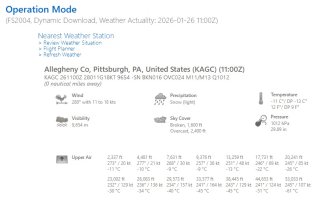
“I didn’t sleep in, I’ve downloaded the met reports and actually the weather here and in Pittsburgh is pretty good for flying today.” She turned her stare on both of us. Those damned spanner eyes.
“Look outside” she pointed at the big restaurant windows “You can see enough blue to mend a Dutchman’s trousers as my granny used to say.”
She was right but I couldn’t resist the quip: “Didn’t manage to kill us yesterday so you’re going to have another go today?”
“No, honestly here are the reports:” She slapped two print-outs on the table:
Fred weather.jpg
Pitts weather.jpg

“Excellent!” Callum added “I did have a surprise planned for today but didn’t say anything as I thought we might be grounded. She’s a beaut and airworthy, a regular on the show circuit. Ex Canadian Royal Air Force. I’m saying no more, wait and see.”.
Callum made a phone call “Their preparing her as we speak.”
In the taxi ride to the airport we discussed the Airmaster
“She would be awesome with one of JGF’s panels and a pitot heater.” Callum mentioned.
“He’s not far behind us, we’re bound to meet, Suzie you’re going to have to smile nicely and maybe, just maybe…” I added.

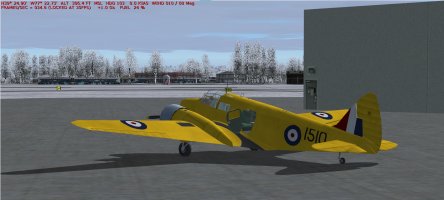
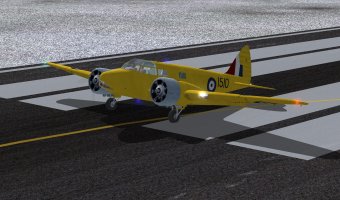
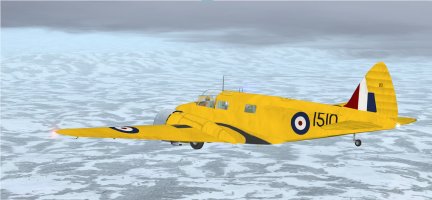
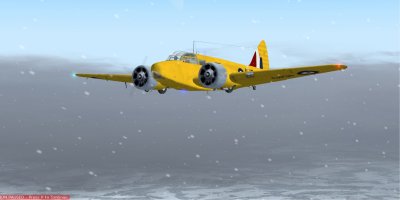
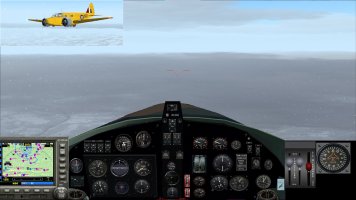
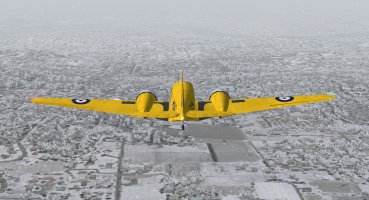
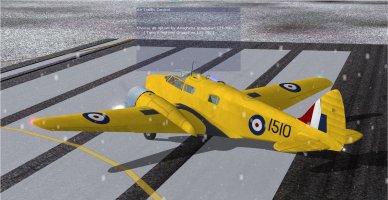
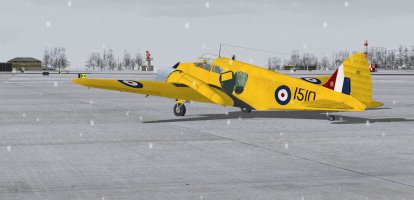
She was parked outside the hanger, I walked round her:
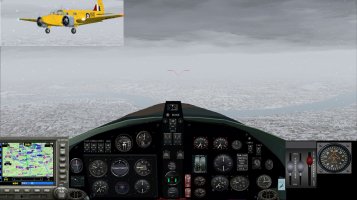
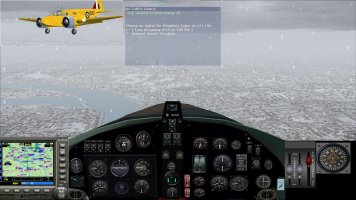
1 oxf.jpg
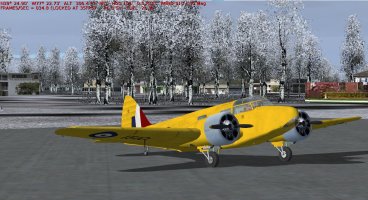
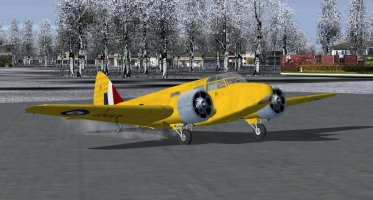
2 oxf.jpg

One of the less glamorous babes of WWII, an Airspeed Oxford.

With thanks: This aircraft is released as Freeware.
Copyright (C) David Molyneaux 2018. All rights reserved.
With an edited version of David Molyneaux’s comprehensive history:

In 1936 the Air Ministry issued a specification T.23/36 for a twn engined trainer aircraft. Airspeed (1934) Ltd. were invited to submit a tender because they had produced their Envoy twin possesing the desirable features of retracting undercarriage and flaps.
The aircraft would be a 'jack-of-all-trades' to be used for pilot training, navigation, night & instrument flying, radio, gunnery and bomb-aiming.
The prototype first flew in June 1937 and development flight tests were completed by the Autumn.
The Oxfords were made of stressed skinned wood with glued joints and covered with fabric for painting. The majority were powered by two Armstrong Siddeley Cheetah X radial engines with fixed pitch wooden propellers.

“Let’s get going while the weather holds.” The ever practical Suzanne.
As there was plenty of room George Kowoloski from the Historical Society would be riding shotgun, “Just in case you guys need any help.” George added.
She was fuelled to 99% (1115 Lbs) and easily took our 700 lbs. Non-paying load.
Suzanne had prepared a basic plan:
Heading 295 at 5000’ this being a safe altitude to cross the Appalachian mountains, passing north of the famous railway Cumberland Gap and Mount Davis. Skirting the Cacapon State Park and Paw Paw whatever that was :)
By the time all was settled and we powered up it was 11:00.
3 oxf power up.jpg

Cleared for take off rwy 5 we lined up ready to go:
4 ready f to.jpg

Take-off drama free just as I like them. Today the snow looks picturesque:
5 snow nice.jpg

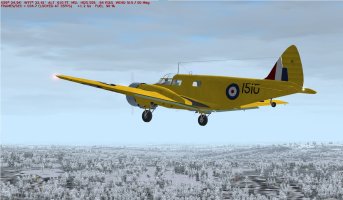
Turning onto our 295 heading as we climb.
6 turning for 295.jpg

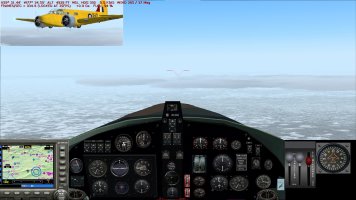
At 5000’ all looks serene but the pitot had frozen again, the KIAS gone to 0. It turns out the pitot heat switch works in the opposite way to the rest of the bank of switches. When flicked down it came on and within a few seconds the gauge was operating properly again. Had someone wired it the wrong way round?
7 at 5000.jpg

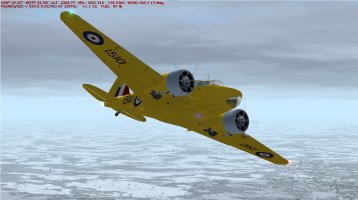
As we approach one of the Appalachian ridges cloud is developing:
8 cloud dev App ridges.jpg

Part 2 to follow
 
Mon. 26th. Jan.
(KFDK) → (KAGC)
FS9/2004

Part 2

The weather has taken a turn for the worst, we climbed to 6500’ above the cloud, cruising at KIAS of 150 and ground speed of 125 Kts with a head wind 281 at 38 kts.
9 snow dev.jpg

Some 20 nm. From Allegheny we started a descent back into the snow:
10 back imto sno.jpg

Close enough for radio contact and we are cleared for a straight in approach to rwy 28:
11 cleared rwy28.jpg

On final for a rwy we still cannot see:
12 on final.jpg

Finally the rwy is just about visible, just left of our centre line:
13 just ab vis.jpg

Runway now visible directly ahead and we are cleared to land:
14 cleared rwy 28.jpg

Touch down and she just kept on going and going, engines at idle and she kept on accelerating. I had to use cadence braking (quick bursts of brake) or she would nose down and flip over. Just about managed to come to a halt at the end of the runway:
15 floating.jpg

16 would not stop.jpg

It was happening in the taxi as well, engines at idle and I had to keep braking to keep at a taxi speed. Some work definitely needed on the flight model. We struggled to taxi her to our parking lot.

Engaging the parking brake and closing down was something of a relief.
17 safely down and out.jpg

Hello Pittsburgh.
 
Really nice. Is she available somewhere ?
The file I have is juw33fs9.zip

"FS2004 vintage - Junkers W 33b

The magnificent Junkers W 33 was built like a coal-shovel: solid, simple, slow, indestructable and to be used for any purpose. It could be repaired in every blacksmiths shop.
pushback "system", rain-effective windscreen, smoothly working gauges in DVC, ski kit ...
8 LOD-models, also ideal suitable for AI-traffic.

by Hauke Keitel and Rolf-Uwe Hochmuth"

I've seen screenshots of a W33 with enclosed cockpit and more modern, thought still period, panel; but they appear to be from a later sim.
 
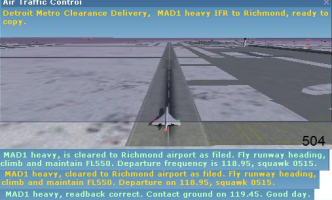
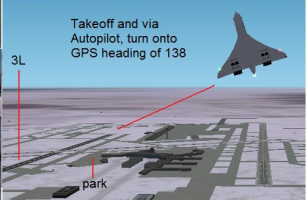
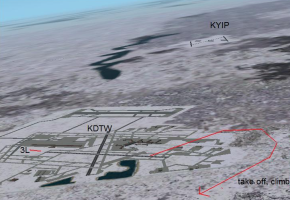
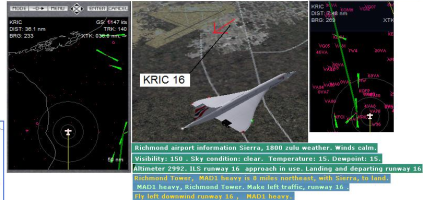
Concord: KDTW Detroit to KRIC Richmond. Part 1 continued (apologies for the long post but this combo of KDTW to KRIC then KMQI to KFFA is my 'swan song' for this Air Tour, my major effort and very enjoyable too amongst all the frustrations, see it IS ALL FUN!!!). I keep getting lost! Still struggling with nav in the modern aircraft. Think I need to flip the 'NAV/GPS' switch to 'GPS', after setting up the route in the Route Planner. Keep forgetting to do that. I simply expect the plane to fly the GPS route when I activate the autopilot (AP). I look at the Nav Log to see the direct heading to destination, put that in HDG and after take-off, activitating the AP, the plane turns onto that heading. Now that AP I'm also still struggling with, irrespective of plane. It's one thing to understand the theory but another to have a nice, refined, reflex-action procedure in one's head for it, suppose it's the old story of 'practice makes perfect'!

1769467957766.pngRolling on 3L.
1769468040891.png
And off
1769468138866.png
Climb out and turn onto heading of 138.
1769468220155.png
1769468263957.png
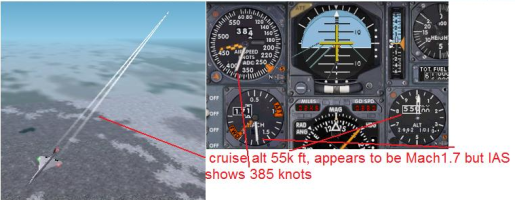
Got to proper cruise and supersonic (I think). (Am also still struggling with all this supersonic jazz, I understand that groundspeed and airspeed are different, Mach meter shows supersonic but IAS shows 385 knots. However late yesterday on the Nav Log I think it was, I saw a groundspeed value and it was over 1,000 knots. I do have doco on how to fly the Concorde but what switches to set I'm still unsure of.
1769468401112.png

Anyhow, the NAV/GPS thing, I had AP on but still set to HDG not NAV. Maybe this is my mistake. GPS display shows crossing into what I think is Virginia. But flew way east of KRIC and had to do a big turn around (boy, that Concorde has a very large turning circle) and using the Map View and decluttering airports to only show VORs, found the 'RIC' VOR, figure that must be KRIC, flew towards it and eventually able to zoom in on Map View to see airport KRIC. Didn't need all that extra workload! (Same as my little Cessna flight to KYIP, I twigged I was past the airport when the GPS display starting to show the distance that was decreasing before, was now increasing, oh shizer ..., lost again!)
1769469069060.png
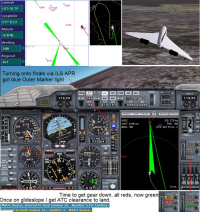
By luck I was on the right side of the 16 rwy but in opposite direction, hence (I think) on left circuit for 16. However way too high, and also wanting to have a nice long final, flew way past KRIC before doing the turn to crosswind then a nice long final. (Saved my flight often as wasn't confident of being able to land properly, but either I got lucky or am improving skills, or both, as it all went great!)
1769469638211.png

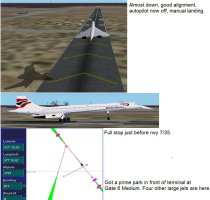
Surprised at how short the landing rollout was. Concorde needs a long strip, about 9k ft for takeoff min and for landing so I've read in the doco.
(I've found that a complete AP ILS landing to touchdown, in whatever aircraft and the airports I've tried, lands me not on the rwy, could be a small misalignment with the scenery and the ILS thingy. As stated in doco and RW, pilots disengage AP before landing and manually fly. Had been experimenting with a totally automatic landing in the Concorde over recent months, but it doesn't work. Whatever, after a couple of attempts decided to disengage AP once established on the glide slope and was surprised that I could bring the plane in manually without crashing. Will still try and refine this 'total AP' landing issue in coming months.)
1769470377598.png
1769470549147.png

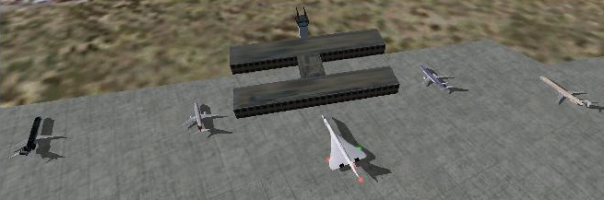
Great to be here! The entourage disembarked into the terminal. The Squits Foundation had arranged for the Concorde to be on public display, with tours inside. Quite a big crowd was at KRIC to watch it land. The Foundation has already been in touch with local schools via the education authorities and school kids will have tours during the coming week. This will all happen whilst MAD1 drives down to Dare County and the rest of the entourage will travel by minibus to Kittyhawk to watch MAD1 fly in in the Sopwith Camel, all going well.
 
Last edited:
Leg 19: Greenville Downtown Airport (KGMU) to Smith Reynolds Airport (KINT)

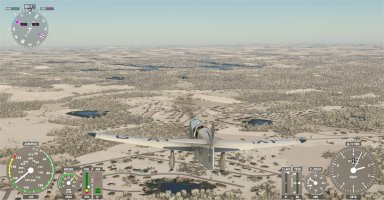
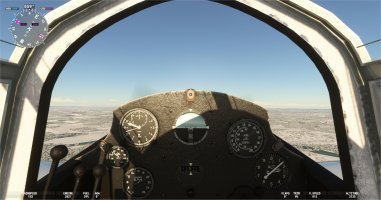
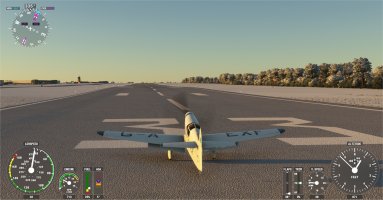
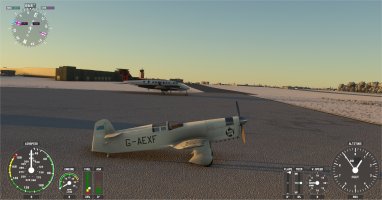
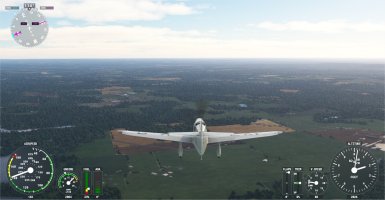
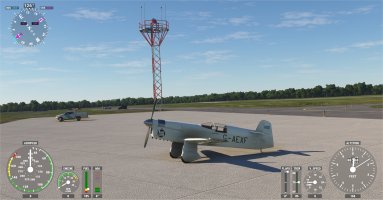
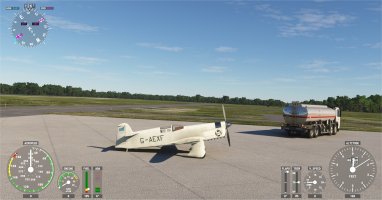
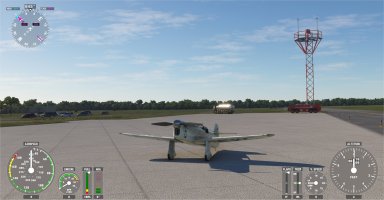
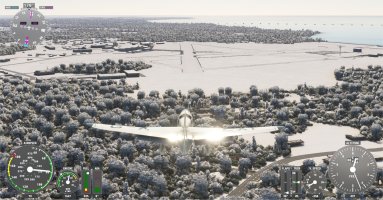
Flying the Percival Mew Gull in MSFS 2020. Using Active Sky FS for weather and Little Navmap for navigation. Using FSLTL for AI traffic.

01 ready to start.jpg
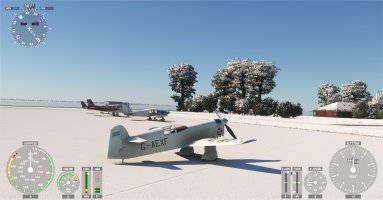
Ready to start the engine on this beautiful day. Yesterday all the general aviation aircraft were parked in front of me. Today there are only aircraft parked behind me. 34% fuel on board for this leg.

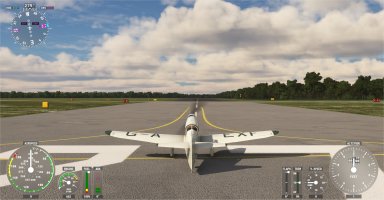
02 takeoff 01.jpg
After a short taxi, lined up for takeoff on runway 01.

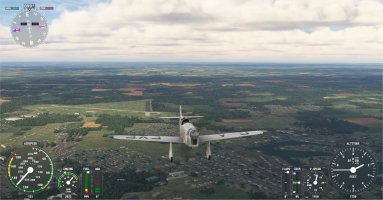
03 on the way.jpg
Up in the air and on course for Smith Reynolds Airport in North Carolina.

04 green below.jpg
For a short while everything was green below.

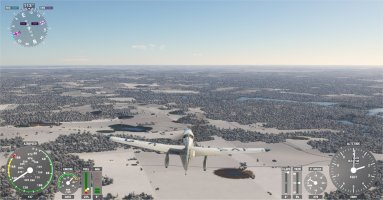
05 white below.jpg
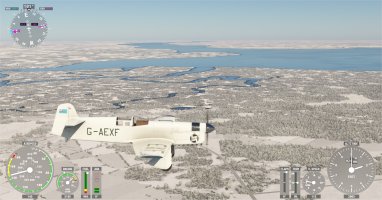
Not much later everything was white below. I actually doubled back to get the previous two pictures. The first time the terrain below turned to white it happened quickly while I had my eyes in the cockpit doing my usual instrument scan.
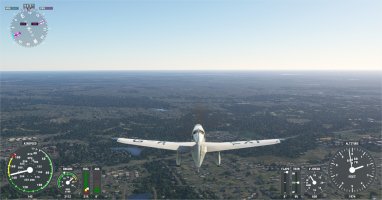
06 half way there.jpg
Half way there on a beautiful day to be flying. Some clouds ahead but no weather issues on this flight.

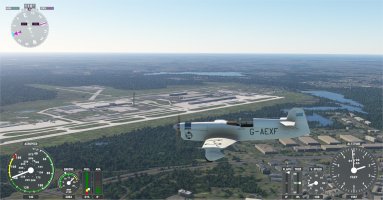
07 airport in sight.jpg
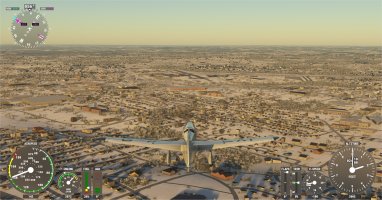
Airport in sight ahead. These airports in the middle of town are a bit harder to spot, so I was pretty close by the time I took this picture. Wind direction indicated a landing from the South on runway 33. So I banked right and got setup on downwind for runway 33.

08 winston Salem Base leg.jpg
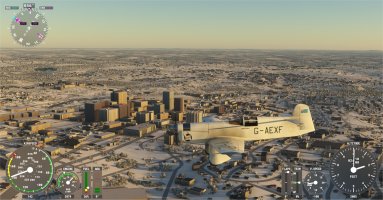
On Base for runway 33. Here is downtown Winston Salem off my right wing.

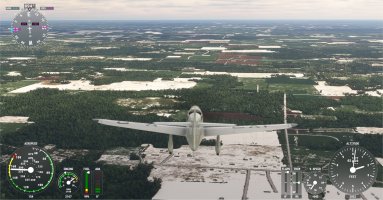
Had a bit of trouble getting lined up straight on final for runway 33. Finally put the camera down and concentrated on the landing.

09 touchdown on 33.jpg
Touchdown right on the numbers after all.

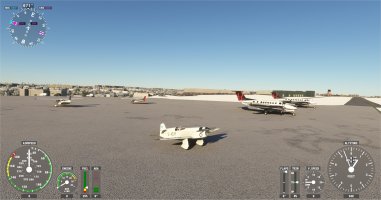
10 parked by commuter.jpg
Parked by a commuter aircraft. After engine shutdown, have 25% fuel on board.

Next stop is Wilson Industrial Air Center (W03) in Wilson, North Carolina. This destination looks to be about 112 nautical miles so I can get there in less than an hour without refueling.
 
Leg 20: Smith Reynolds Airport (KINT) to Wilson Industrial Air Center (W03) Part 1

Flying the Percival Mew Gull in MSFS 2020. Using Active Sky FS for weather and Little Navmap for navigation. Using FSLTL for AI traffic.

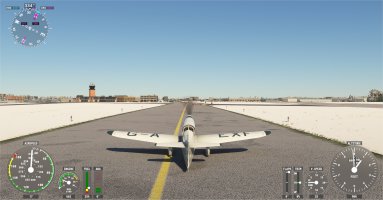
01 ready to go.jpg
Ready to start the engine on the general aviation ramp. 25% fuel on board for this leg.

02 long taxi to 22.jpg
It was a long taxi to runway 22 for takeoff. And I had to dodge a few vehicles on the taxiway enroute.

03 takeoff 22.jpg
Lined up for takeoff on runway 22.

04 On way.jpg
On the way to Wilson Industrial Air Center.

05 clear skies and snow.jpg
Clear skies and snow.

06 passing KGSO.jpg
Passing Piedmont Triad International Airport (KGSO). Seems very quiet down there. Not much activity.

07 more clouds above.jpg
More clouds above, but no snow below.

08 snow again.jpg
Back flying over snowy terrain.

09 no clouds or snow.jpg
Green fields below again. The view keeps changing. Getting close to the destination now.

Part 2 to follow . . .
 
Leg 20: Smith Reynolds Airport (KINT) to Wilson Industrial Air Center (W03) Part 2

11 passing KRDU.jpg
Passing Raleigh-Durham International Airport (KRDU). This is a VERY busy airport. Shortly after the above picture an airliner passed below me on its way to land on 23R. And there were at least 3 airliners in trail behind it on the way to landing.

12 airport in sight.jpg
Airport in sight ahead. Lowered the flaps and banked left to get on the downwind.

13 base for 21.jpg
On Base leg for runway 21.

14 final 21.jpg
Long final for 21.

15 touchdown 21.jpg
Touched down just left of center line.

16 parked quiet ramp.jpg
Parked on the quiet ramp at Wilson Industrial Air Center.

17 18 percent fuel.jpg
Only 18% fuel left after shutdown. Glad the fuel truck was waiting for me so I could top up.

I called ahead to Dare County Regional Airport (KMQI) and they have a rare vintage aircraft waiting for me for the next leg to Kitty Hawk. I have permission to bring their pilot along and fly to Kitty Hawk and then back to Dare County. Should be a fun adventure.

But first, my next relatively short flight is to Dare County Regional Airport (KMQI)
 
Mon 28 Jan (Australia Day public holiday, our national day). What a huge change, from Concorde to Sopwith Camel!
KMQI Dare County to KFFA Kitthawk.

Arriving at Dare in my hire car (enjoyed the scenic drive from Richmond), as pre-arranged, they had a nice plane waiting for me.
1769569197967.png Not used to a trail-dragger, so that'll be fun!
Oh, and no brakes! Yikes!
1769569292388.png
1769569507617.pngDid all the briefing stuff in the office with the plane's usual pilot, then the inspection walk-around. Then some practice starting up and taxiing. Quite difficult, no brakes but can turn left and right with rudder pedals. (For realism I swapped my usual yoke for a Logitech joystick, which was overly sensitive with the stick twist for left and right steering, I didn't bother trying to adjust it.) First taxi attempt the plane just kept turning to the right, must be due to the prop's effect. The pilot had warned me about this, so I was expecting it, the rudder pedals only needed a very small input with my feet to cause a big swing left or right. Double yikes! But a little practice soon sorted it out. As I climbed out of the cockpit the pilot strolled over and with a big grin said "Well my man, I told you so about the Camel when taxiing, you sure swung all over the parking area at first, but I could see you were getting the 'swing' of things, pun intended"! I replied "Yeah, initially gave me a hell of a scare, but hopefully that's the last surprise in store. As I'm only going to do this short hop to Kittyhawk and one landing and taxi to parking there, I think that's enough practice". He agreed and advised me that I was "good to go".

1769569641766.png
After a calming visit back to the office, a warming coffee (brrrr, who's silly idea was it to do a winter air tour that included possibily open-cockpit aircraft? Thankfully it's only a short hop to Kittyhawk and am only staying low.), and piling on the extra vintage era flying jacket, sheepskin boots and leather helmet (no radio in this jalopy, so no headphones, this is an absolute bare-bones flight.)

I climbed into the cockpit, not much to check, simply flick the two magneto switches to on, call to my assistant (the instructing pilot) "Contact"!, he swung the prop and the old girl spluttered into life again (engine was nice and warm from my taxi practice).

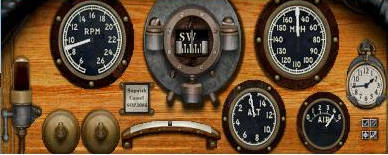
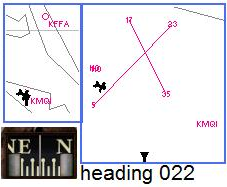
900 rpm idle, oil pressure OK as shown in the sight glass. Tricky re nav, as all I have is the compass. My heading is 022 so had carefully eye-balled where that is on the old compass display, basically NNE, so need to keep the display looking like this (had lined up in taxi practice with the bearing so I knew what it looked like.)
1769569991159.png
1769570228531.png
This flight was all pre-arranged, so the kind folks at Dare made the proper radio calls to alert any traffic of this historic aircraft doing an historic re-enactment (with no radio). Taxied to the threshold, difficult to steer, and as well am completely foreign to this aircraft so went very, very slowly!


1769570445863.png1769570544844.png
1769570588116.png
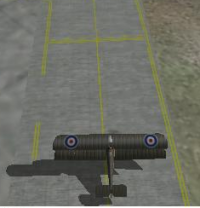
Turned onto 5, full throttle, rolling!
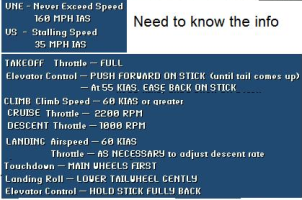
2,400 rpm, 50 mph. Tail lifted up, then gently eased back on the stick and we're off!

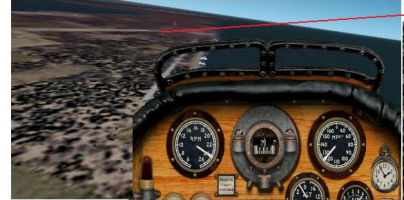
After a short time the island became clearer. That beacon must be KFFA? Same old story, unsure re my nav. Pure dead reckoning, trying to fly a straight course on heading 022.

1769570765036.png
It wasn't it, couldn't see any strip anywhere, so turned at the ocean coast and flew northward.

[Continued in part 2.]
 
Last edited:
Mon 28 Jan KMQI Dare County to KFFA Kitthawk. Part 2.

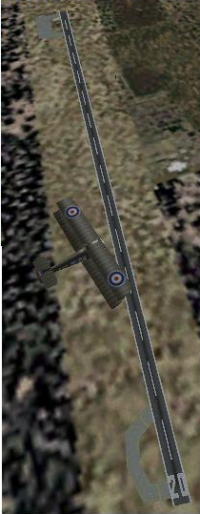
After some 1769571307196.pngminutes could discern what might be the strip ahead on the left. Did a few laps, yep, rwy 2.

(Apologies for the scrappy layout, my copy and paste from my graphics program into here has dodgy behaviour, just wanta get it done.)


1769571580820.png


1769571701063.png


1769571844792.png

<<<
On final,
not on line.


1769572139931.png


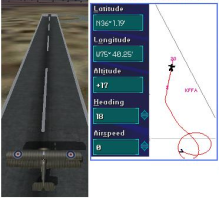
Touchdown! But no brakes to slow down! Just gotta let her roll.
Think I'm in the right place. But nothing or anyone around, no taxi-ways, buildings or anything. [In my FS2002, thought FS would have had something here, an 'Easter egg' or somesuch, e.g. the monument, but nothing, had a good look right around.]

So taxied to end of 2 to the semi-circular turn-around and parked on grass, and shutdown the engine.

Eventually a convoy of vehicles arrived, and in good old traditional nav method I asked "Is this Kittyhawk"? Raucous laughter and cheering by the crowd in the vehicles "Yes man, you made it, this IS Kittyhawk.


1769572567841.pngThey helped me chock and tie down the Camel, then off to the Kittyhawk Memorial building which was some way away, for a joyous welcome with hot drinks and food (I was freezing in the open cockpit!)

What a dream come true - a successful Concord flight (have only accomplished a few so far), then the Camel to the famous Kittyhawk. And the good company of this fraternity makes is especially sweet, people to share our flights with.

And I didn't crash once! And only got a little lost but impressed myself how I recovered and found my destination both times.

A BIG THANK YOU TO VP2 FOR THIS AIR TOUR.

I'd waited a couple of months for it to arrive, and it's been most enjoyable to be hanging out with the gaggle, and reading the great posts with great pics.

I'll still stay engaged with the Tour, will do up a Gaggle Sitrep soon (am interested to track all participants until the last one finishes.)

The next phase for MAD1 is having re-joined the Concorde entourage, to go back in the minibus with them to Richmond, where we'll depart in the Concorde to home ports. Hopefully some social activity with whomever in the gaggle will be at Richmond for the next week or so whilst we're still there.
 
Last edited:
KMEM to KEKY, map says 213 miles, GPS says 183 miles, my entire flight was 258 miles .....in one hour even. It's a good plane but not that good. The Gulfhawk II was built in 1936 for Major Al Williams, then aviation consultant for Gulf Oil, who sponsored the plane. Using an F3F fuselage with F2F wings and vertical tail, all stressed for acrobatic work, powered by a 1000hp Wright Cyclone engine, the Gulfhawk was a fixture at air shows around the US and Europe for many years. It is said it could fly inverted for half an hour. In Germany Ernst Udet became the only person other than Williams to fly the plane, in return Williams became the first American to fly a Bf109. During WWII the Gulfhawk was used as a testbed for fuels and lubricants. In 1948 Williams made its last flight - to the Smithsonian, where it has been on display ever since. Top speed was around 280mph, the FS2004 model cruises faster than that and tops out over 310mph. Rather than tweak I'll fly this leg again with a different plane. But FTR,

kmem.jpg

kmem2.jpgclearskies.jpg

down-.jpg
 
Wed. 28th. Jan.
Pittsburgh, Allegheny Co. (KAGC) → Dayton, Jackson Rgl. (I 19)
FS9/2004

We had taken the day off yesterday. The weather was flyable but not pleasant and we had to source a suitable aircraft. A Miles Gemini was, so we booked it.
Today the weather is GOOD! Cold -15 to -16C and a slight headwind 7 to 18 Kts depending on altitude but clear, no snow falling and good visibility.

The model is by Dave Molyneaux (many thanks to him again) and once more an edited version of the history that comes with it:

“The Miles M.65 Gemini was a British twin-engined four-seat touring aircraft designed and built by Miles Aircraft at Woodley Aerodrome.
Designed as a twin-engined retractable landing gear version of the earlier Miles Messenger the Gemini first flew on 26 October 1945. The Gemini was a low-wing cantilever monoplane of plastic-bonded plywood construction. It had twin vertical tail units and was originally powered by 100hp (75kW) Blackburn Cirrus engine. Some 130 odd were produced. Later models fitted with various more powerful engines.”
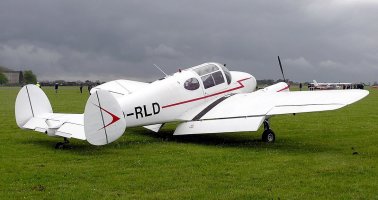
The real thing:
Real thing.jpg

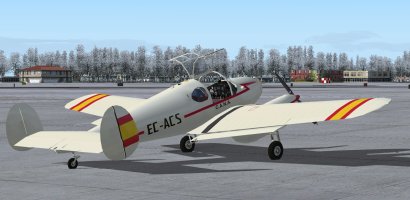
The model.
1 gemini.jpg

This leg is around 200 nm. We fuelled with 264 Lbs some 67% capacity. And our 170 Lbs each plus Suzanne’s make up bag (another 25 Lbs.) totalling 535 Lbs. Pay load.
Time to get moving!
We powered up and got clearance to hold rwy 28:
3 cleared.jpg

With clearance to take off almost immediately after holding. Take off safe and predictable:
4 lift off.jpg

Waving good-buy to Pittsburgh as we climb for 3500’. This leg is one of the longest (230 miles or 200nm.)
Not a lot to see as the clear sky soon turned hazy and the landscape flat and white. Passing over Columbus one of the few points of interest. This Miles has no auto pilot so it was hand flying all the way. The wind was not much help; a head wind swirling from 300 degrees to 225 and 7 Knots to 15 A tiring constant struggle to keep to our 260 degree heading:
8 port columb 1.jpg

9 port colum 2.jpg

Droning on and finally within radio contact of Dayton, Green County-Jackson Regional (I19), the name longer than the runway. (Only 3961’ long) Plenty for the Gemini. Automated weather giving helpful ground conditions:
10 auto weather.jpg

Airport in sight. I hope that Beechcraft ahead of us does not get in the way. Unlikely as she is bound to be faster than us.
11 in sight.jpg

Low on final, I put on more power to climb to a safer approach height:
12 low final.jpg

Touch down safe enough but right of the centre line. I blame the cross winds. Retracting the flaps after touch down brought the tail down and ensured the Miles would not bounce back into the air.
13 touch left c.jpg

Taxi was uneventful and we shut down.
The time was 12:10 so we had been flying for 2 hours and 10 minutes and used around 23 gallons of fuel. The average speed around 90 Kts.
I think Callum has something organised for the last leg tomorrow. We shall have to wait and see
 
Thursday 29th. Jan.
Dayton, Green County, Jackson Reg. (I19) → Willow Run (KYIP)
FS9/2004

PART 1
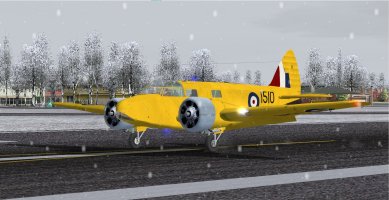
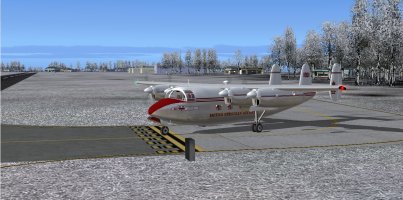
It was bitter sweet, the last leg. Soon time to say goodbye to friends we have been flying with for the best part of the last two months. Quite a tour, 27 legs across the USA through December and January.

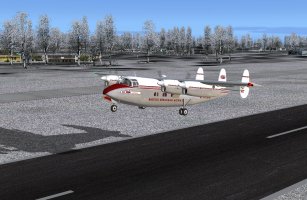
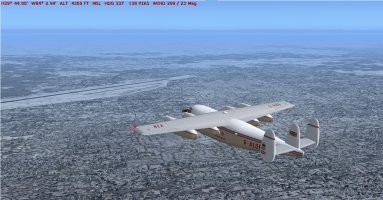
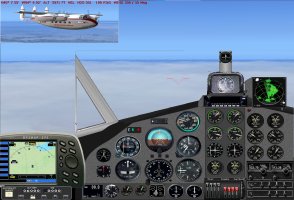
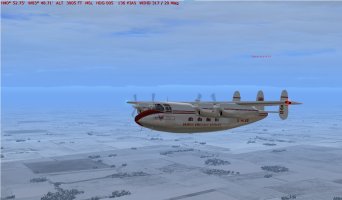
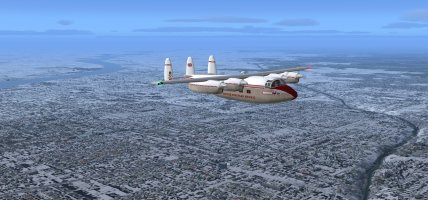
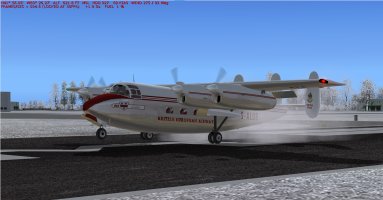
I had organised this, our last aircraft of the Tour. A swan song for our swan song. The Miles M.60 Marathon (the name totally deceiving as we were about to find out.). The Miles Gemini, of the last leg, was the last completed Miles aircraft. This, the Miles Marathon bankrupted the company. They were bought over by Handley Page who completed some 40 examples. The first flight was in 1946.
A fuller history available on Wikipedia and other places.

We walked out in the -18C sunshine:
Miles 2.jpg

It should have been powered by two early turboprops but ended up with four Gipsy Queen 330 HP. units. An elegant aircraft, a fusion of pre war and modern post war rolled into one.
It could seat 20 passengers and reportedly fly some 800 nm. On 290 US gallons of fuel, (it’s max fuel capacity).
We loaded all our junk, Suzanne and Callum passengers today together with three aviation journalists (no influencers. I was paying today.) An experienced pilot on the type in the left seat, me Co-Pilot.
We filled to 50% capacity (some 110 gallons), our pay-load 1360 Lbs.
The plan was 5000’ cruise on a 13 degree heading. Expected wind was 305 at 28 Kts.
We were cleared to hold at rwy 25:
2 hold rwy 25.jpg

Take off smooth and predictable, lifting at around 100 Kts.:
3 take off.jpg

Performance smooth rather than spectacular. We turned north and we were about to fly round Patterson AFB when we unexpectedly got permission to fly over, we had almost reached our cruise height of 5000’:
4 over AFB.jpg

The flight smooth, with the head wind we cruised at KIAS of 195 and GS of 190. An overcast had developed beneath us:
5 overcast below.jpg

The fuel consumption was way above expected, we decided to get below the overcast at 3000’ and reduce cruise to around 136 Kts.:
7 below ocast.jpg

Over Toledo and fuel remaining was only 9%.:
8 over toledo.jpg

Only some 35 nm. from Willow Run we decided to carry on.
It was the wrong decision, soon we were down to 3% and decided we needed to do an immediate emergency diversion to the closest suitable airport. Custer (KTTF) fitted the bill with a 5000’ runway 3/21. I hoped it was not going to be our last stand!
We turned onto base leg with 2% fuel remaining. Custer is on the left over the river.:
9 emergency.jpg

The pilot brought her in nicely, landing on fumes:
10 land KTTF.jpg

We had enough fuel to reach the apron and park next to a Dash 8 and power down:
11 to find fuel.jpg

We had 8.3 Lbs of fuel left, just over 1 gallon.
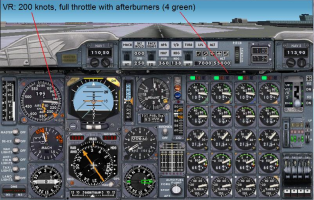
 
Leg 21: Wilson Industrial Air Center (W03) to Dare County Regional Airport (KMQI)

Flying the Percival Mew Gull in MSFS 2020. Using Active Sky FS for weather and Little Navmap for navigation. Using FSLTL for AI traffic.

01 ready to fly.jpg
Ready to start the engine on the general aviation ramp. Topped off the fuel tanks so 100% fuel on board for this leg. This is my second full tank on the Air Tour journey so far. This Mew Gull uses fuel efficiently.

02 takeoff 27.jpg
Based on wind direction, ready for takeoff on runway 27.

03 on way.jpg
On the way. My runway 27 takeoff was to the West. I came all the way around to almost the reciprocal heading to get on course for Dare County Regional Airport.

04 snow transition.jpg
Spotted the transition from green fields to snow cover below as I headed East. Most of the rest of the flight was routine.

05 Albemarie Sound.jpg
Getting close to the Atlantic coast and my destination. See Albemarle Sound off my left wing.

As I was initially approaching the Island the wind was from the South so that dictated a landing on runway 17. As I got closer to the airport the wind went down to zero. I continued the plan to land on runway 17 just in case the wind picked up again.

06 airport in sight.jpg
Airport in sight ahead on Roanoke Island. Lowered my flaps and banked left to get on downwind for runway 17.

07 Base leg over sound.jpg
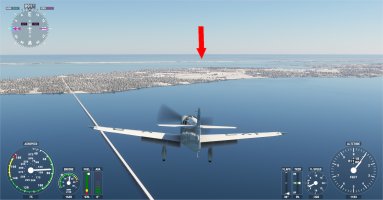
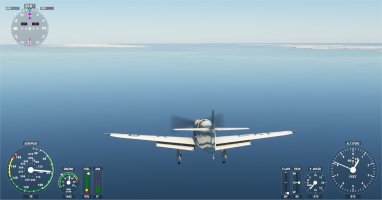
On Base leg over the Sound. I was very careful during downwind, base, and initial final because I was over water the whole time. And at least in this version of the simulator it was very difficult to judge visually how high I was over the water. You can bet that the local reported barometric pressure was checked and my altimeter was set correctly.

08 final for 17.jpg
Safely over land again and on short final for runway 17. Had a good and uneventful landing.

09 parked at Parking 6.jpg
Parked in Parking spot 6 on the General Aviation ramp. 93% fuel on board at shutdown.

Louis met me as I shut down the engine. He had an interesting French accent.

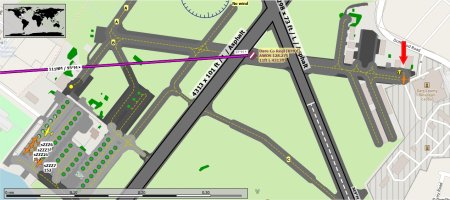
10 airport map.jpg
He explained that our aircraft for the short flight to First Flight Airport (KFFA) and back was parked across the airfield near Parking Spot 37. This location was partly to protect the vintage aircraft more than it would be here in this busy ramp area. After I had a chance to stretch my legs and use the facilities we headed over there to see the aircraft. This next leg of the journey will be fun! :)
 
Back
Top